
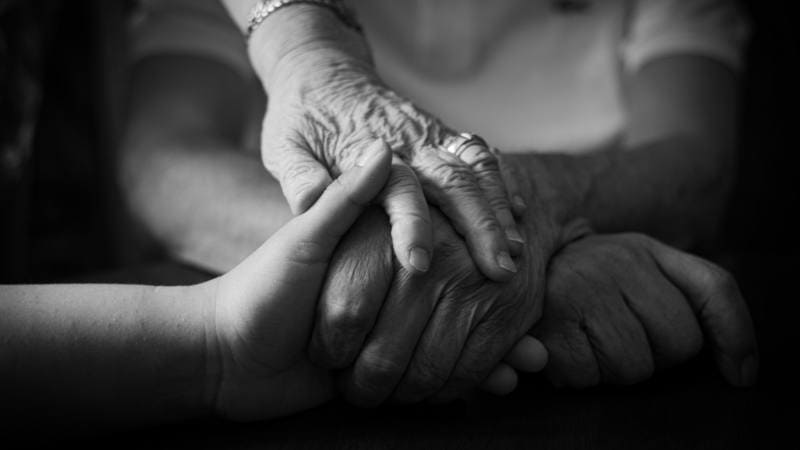
The reports out of Zimbabawe make distressing reading and we asked the ZANE carers to give us two case studies to show the difference that help from ZANE can make as people come to the end of their lives. If you are already a ZANE donor, we thank you, if not, we urge you to follow the link below to help make a difference to the plight of the elderly folk who have nowhere else to turn for help.
Mrs B. and Mr P.
I assessed a couple in their home in Harare after they’d been referred to us by a friend who was concerned for their wellbeing. They are Mrs B (71 years old) and Mr P (76 years old). Mr P had a stroke 4 years ago and is fairly disabled on his right-hand side. He has difficulty walking and his speech is laboured and muffled. I could understand most of what he was saying but it required much effort from him and he was irritable and exhausted. He told me that farmed most of his life and last worked in 2014. After working at several different jobs which didn’t last long.
Mrs B, who is his common-law wife, has lived together with him for at least 25 years in her own home since her husband died. She has worked in administrative jobs all her life and for the last 27 years has worked at a local theatre, where she is still working now. She is paid in ZIG which converts to about US$65 and that is what they have been surviving on. Mr P has 3 adult children who help when they can with groceries and small amounts of money, but this does not happen regularly and he is embarrassed to ask them for more assistance as all of them struggle to make ends meet themselves.
These two old folk have worked hard all their lives and live extremely frugally, wanting desperately to be independent and not reliant on their children, so their current situation is very uncomfortable and distressing for them. I will be discussing them with the team and feel sure we can help in some way.
Having discussed this couple’s predicament with the team, we have been able to take them onto the ZANE books to pay their medical aid and supply them with a monthly food parcel.
Mr K.
Mr K was born in Bulawayo and did his turner and fitter apprenticeship through the National Railways. He later on became the photographer for the Railways. After his first wife passed away, he remarried. After selling their house they lived in a retirement complex in Bulawayo for a few years. The Ks had sold their house and their retirement plan was to live off the money from the sale. When inflation hit in the early 2000s, they lost everything. He had been paying into the Railway pension fund, but was paid out when he retired.
They had free accommodation at the complex as Mr K was the caretaker for the retirement home. They then decided to move to a golf club as the caretakers. Mr K was the caretaker and Mrs K did the office and accounts. They were living in a building that was converted from a storeroom to a small cottage. Mrs K then passed away in 2021 and Mr K stayed on.
By 2024 he was struggling to look after himself. He had been receiving dialysis for kidney failure for a few years and it had started to affect him. ZANE had started paying his medical aid in 2019 to support him as his salary was insufficient. The Golf Course did not pay him a lot and he ate lunch with the ground staff. By early 2025 we had started organising frozen meals for him as he was too exhausted to cook for himself in the evenings. By March he kept falling over and we managed to convince him to move to a care home by the end of March. There was no way he was able to still live on his own. His cottage was a mess and his health deteriorating.
It took him some time to settle into the retirement home, but he eventually made friends and settled into the routines. The move itself was fairly smooth as he did it voluntarily and did not fight it. He had managed to sell his belongings before he moved and this money went into a small conduit which we kept for him. He was still driving himself to dialysis and around town for errands.
By early July he was complaining of serious shoulder pains and we sent him to a specialist. It turned out that the shoulder pain was an old injury that was playing up, but it was discovered that he did have a dark spot on his chest. After another visit, the specialist mentioned that it was most likely cancer, but that he would not do a biopsy as his kidney failure was getting worse and the best way forward was palliative as it was quite a large mass already.
By now he had also stopped driving and we had organised 24hour nursing for him. He kept falling every time he stood up and stopped eating, citing that the food was not edible. He lived off biscuits and snacks. The nurse aides tried their best to get him to eat, even making him soups. His mind also started going slowly and he would keep going back to the same topics, such as the meals served. He could not follow a conversation anymore. This was most likely his way of dealing with it all. He kept focusing on his painful shoulder and just shrug the cancer diagnosis off. He also started confusing people for his sister and was in his own little world at the end.
Eventually we organised him a walker, as well as diapers for the night. He already had a commode as his dialysis meant that he needed to use the toilet frequently at night. The staff at the care home were amazing with him and doted on him constantly. On the 1st of August 2025 he passed away peacefully.
Moving him to the care home allowed him to enjoy his last few months as much as possible as for the first time in a long time, he did not have to worry about cooking, cleaning etc. If he had stayed where he was, he would most likely have fallen and not been able to get up until someone found him. It is amazing that he never did break a bone, or worse, during one of his falls.
He has siblings who are still alive, with whom he had lost contact a long time ago. We managed to trace them and let them know what was going on and one sister did make a donation to help with costs of the cremation.
Unfortunately, many pensioners in Zimbabwe face similar patterns of decline to Mr K. This case study illustrates the huge difference ZANE made by turning round a potential tragic end into a relatively peaceful and humane one. May his soul rest in peace.
* Names and images may have been changed for privacy reasons
If you are already a ZANE donor, we thank you from the bottom of our hearts. If you are not a donor but would like to be, please follow the link below and know that every donation, however big or small, goes directly to where it is most needed. If you would like to help but can’t donate, please join the ZANE family and ‘like’ or ‘share’ our posts or write us a Google review – every positive step helps spread the word about the life changing work ZANE does.
Thank you – Nicky Passaportis ZANE Australia
Please donate to support pensioners struggling to survive in Zimbabwe
Any assistance is greatly appreciated and goes a long way to giving our pensioners a better quality of life and lift the pressure of money worries which is very debilitating emotionally.
(Donations made to ZANE in Australia, are tax-deductible)